


Nahom
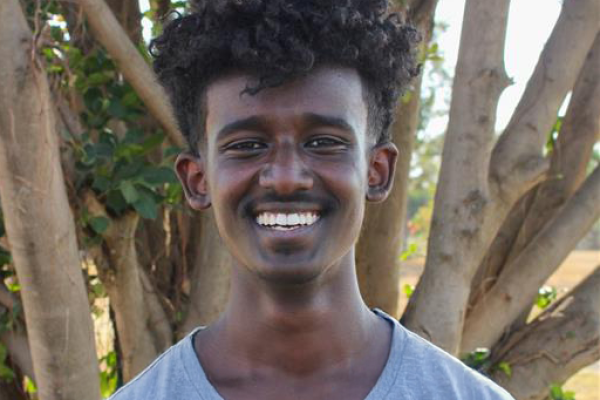
When I look back now, as CTO of a tech startup, I realize that I carry Rafiki with me in every decision, every line of code, every moral choice.
Growing Up in Rafiki
For fifteen years I called Rafiki home—from kindergarten through 12th grade. It was more than a location; it was a living, breathing community that shaped how I see the world. In Rafiki, I learned how to read, to write, to question, to connect—and somewhere along the way, I discovered a love for coding.
Where My Passion for Coding Started
I still remember the first time I opened a computer and typed “Hello, World.” In Rafiki, that wasn’t just a programming exercise—it was a doorway. I got my very first taste of "programming" in an old office, sitting at a borrowed computer. My first major project? The "matrix falling code." You see it in movies all the time: hackers furiously typing, green text falling down the screen. I was determined to make it. After five lines of simple batch script, I had it working. The realization that followed—just how much the movies played us, and how easy the code was—was more powerful than any complex algorithm. It taught me patience, curiosity, and the feeling that with logic and perseverance, I could make a machine obey my commands. Over years, I built small projects, stayed after school to tinker, and grew more confident that this was my path. One project that meant the world to me was a simple application I built to help the missionaries in Ethiopia. They were struggling to memorize names. My solution was a photo-based grouping app that made the process easier. (I've since made a better version and gifted it to Rafiki, hoping it's still helping someone!) This journey wouldn't have been possible without the amazing people who tolerated my beginner attempts and cheered me on. Thank you to Ms. Esther, a missionary who literally spent hours sitting with me as I did the boring stuff behind a screen, and to Tr. Tekle and Ms. Amy who agreed to let me start coding in the first place. I also owe a huge debt to Tr. Taye, Tr. Abeyu, and Tr. Fiseha for their continual support. Just because I mentioned these people doesn't mean there weren't others—all the teachers and students who challenged me to push more. You guys are all amazing, and I will always honor you by becoming better.
A Community of Faith and Kindness
But Rafiki wasn’t just about tech. I was surrounded by people who loved the Lord and lived out that love in kindness, forgiveness, service, and humility. Their faith was not appearance but substance. That environment molded me. Their examples told me: success without character is hollow, ambition without compassion is dangerous. I believe in the proverb, “Tell me who your friends are, and I will tell you who you are,” which reflects a timeless insight that the people around us help form us. (Variations of this have been traced to proverbs in many languages. See “Tell me with whom you associate, and I will tell you who you are.”) In Rafiki, my “friends” were those who shared faith, integrity, and love—and so those qualities grew in me.
Into the World, But Never Away
It’s been a year and a half since I graduated and stepped into the wider world of tech and startups. Since then, I’ve faced challenges, doubts, impatience, and failures. But in every hard choice, I hear Rafiki’s voice: “Be kind. Be honest. Serve others. Keep learning.” What truly matters is a person's morality and beliefs. What's the point of a CTO if people can't rely on you for honesty? What's the point if they think you're too proud to listen to them? In fact, right now I'm writing this while sitting with a junior developer who just accidentally destroyed the servers for one of our core systems (and thank goodness we weren't running that one on AWS during the downtime). My response? Cheering him on: "Way to go! That's one way of doing it. Next time I want to destroy a server, I'll make sure to hit you up." That ability to value people and encourage a growth mindset, even in failure, is pure Rafiki. In moments of doubt, I also remember one of my favorite lessons, shared by a Home Office individual. She started with the quote: "A wise man does not learn from experience..." My first thought was, "Wait, I think you've got that backward! What makes him wise if he ain't learning from his own mistakes and stuff?" Then she finished: "...he learns from the experience of others." It was a lightbulb moment: you don't have to repeat the same mistake someone else made just so you can learn. Just learn from what others failed at. I bring that wisdom with me to board meetings, to code reviews, and to late-night debugging. Today, when I lead engineering teams, mentor younger developers, or make strategic technical decisions, Rafiki’s lessons echo: value people over output, integrity over shortcuts, growth over comfort.
An Ongoing Legacy
Rafiki didn’t just make me who I was—it set me on the path toward who I hope to become. My heart still lives there, in memory and in values. I carry its lessons into every future I build, every team I lead, every system I design. To Rafiki, my home: thank you for the faith, the friendships, the foundations. I will always honor you by becoming better—for others, and for the calling I believe God has placed on me.